



When Does an Old Wooden Bench Really Need Replacing?
Posted on September 10, 2026
Twenty or thirty years is a long time to spend outdoors.
Rain, frost, summer sun and countless changes in temperature inevitably leave their mark on wooden garden furniture. Finishes fade, untreated hardwood gradually turns silver-grey and surfaces begin to show the character of their age.
But does an old-looking bench necessarily need replacing?
We started thinking about this recently after revisiting some of the many Woodcraft benches at Chanterlands Crematorium in Hull. Some have been there for decades, with the examples we photographed ranging from around nine to almost thirty years old.
Put them side by side and there's a remarkable difference in appearance. Some have been treated over the years and retain much of their original colour. Others have been left to weather naturally and have developed the distinctive silver-grey appearance of hardwood that's spent years exposed to the elements.
Yet many remain perfectly recognisable as the substantial pieces of outdoor furniture that left the Woodcraft workshop all those years ago.
Click on the pictures to enlarge


(Above) The Beverley bench around 9 years old with a light varnish
Click on the pictures to enlarge


(Above) The Beverley bench around 25 years old with natural silvering
Click on the pictures to enlarge


(Above) The Beverley bench around 16 years old with a dark varnish
Click on the pictures to enlarge


(Above) The Beverley bench around 12 years old with natural silvering
Click on the pictures to enlarge


(Above) The Beverley bench almost 30 years old with a tan varnish
Click on the pictures to enlarge


(Above) The Beverley bench around 35 years old with natural silvering
Weathered doesn't necessarily mean worn out
One of the most noticeable changes in untreated outdoor timber is its colour.
The warm tones of new wood gradually give way to grey and silver as the surface is exposed to sunlight and weather. Marks appear, the grain becomes more pronounced and small surface splits and checks may develop.
Visually, the difference can be dramatic.
That's why we asked our social media followers a simple question after photographing one particularly weathered Woodcraft bench:
Would you restore it, leave it exactly as it is, or replace it?
There isn't necessarily a right answer.
Some people love the silvery appearance and character of naturally weathered timber. Others would much rather see the surface cleaned and refinished to bring back some of the warmer colour of the wood.
What matters more than colour alone is the condition of the bench underneath.

What could an old bench look like again?
The image above is a visualisation rather than an actual restoration. We used our photograph of one of the older benches to explore how dramatically its appearance might change if the weathered surface were cleaned and prepared and the timber given a new protective finish.
It's quite a transformation.
But Woodcraft doesn't offer a general bench refurbishment or refinishing service, and there is an important distinction between changing the appearance of an old bench and carrying out repairs that could extend its useful life.
The latter is something we can often help with.
Repair rather than replace
Outdoor furniture can suffer localised damage while the rest of the piece remains perfectly serviceable.
A seat slat may eventually need replacing. An individual component might become damaged. Occasionally something simply happens to one part of a bench that has nothing to do with its age.
In those circumstances, replacing the entire bench can seem rather wasteful.
Where possible, Woodcraft can manufacture replacement components for benches we've made in the past, allowing an otherwise serviceable piece of furniture to remain in use.
And when we say in the past, we don't necessarily mean recently.
Mike received an enquiry only last month from the owner of a Waveform bench Woodcraft made more than 25 years ago. One component had become damaged and needed replacing.
Rather than buying another bench, the customer contacted Woodcraft. We were able to make the replacement component and send it to him, and he arranged for his own joiner to carry out the repair locally.
More than a quarter of a century after the original bench was made, being able to supply a replacement part means it can continue doing the job it was designed for.
We think that's rather satisfying.
Furniture that can grow old
A substantial wooden bench can often remain serviceable even when individual parts eventually become damaged or worn.
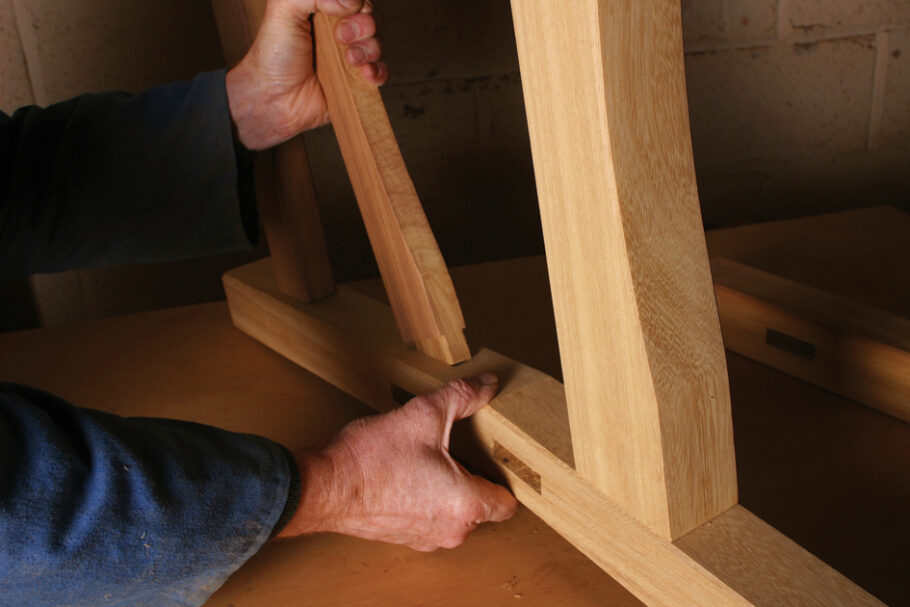
Woodcraft doesn't provide a bench restoration or refurbishment service, but if one of our benches needs a new seat slat or another component, we may be able to manufacture a replacement and send it directly to you. You can then fit the part yourself or arrange for a local joiner to carry out the repair.
It doesn't matter how old the bench is. Send us a photograph of the bench and the damaged area and, if we can identify and reproduce the component, we'll let you know what's possible.
Sometimes replacing one part is all that's needed to give a well-made bench many more years of useful life.


